
 There was really something special about what I call the “indie renaissance,” which began in the early 1990s and was all but over by 2000. During this period, a unique style of film making started to get traction, a style that combined great but quirky dialog, super-efficient scene structure and dramatic flow, quick humor (the opposite of Judd Apatow, in case you’re wondering,) unusual and/or minimal scoring, a complete absence of postmodern themes, and relatively unknown actors getting a chance to shine. Directors like Whit Stillman, Victor Nunez, Tom Noonan, Gavin O’Connor, and Henry Jaglom are examples of some of the brigher lights of the renaissance. Eventually, this style devolved into the tepid, highly commercialized independent film movement of today, which unfortunately shares most of the same flaws as Hollywood. But for a brief while this little piece of the film industry was pretty thrilling, churning out all time classics on a regular basis. It’s actually what made me really start to like and appreciate movies.
Next Stop, Wonderland is a perfect example of this indie renaissance. It’s a movie that I have always enjoyed every time I’ve seen it, and watching it again recently I was struck by just how fine this film is compared to the mountains of indie-trash that we currently have to sift through when looking for something fresh at the movies. I thought I would pause for a moment and say a few words about this nifty little film!
Next Stop, Wonderland was Hope Davis’ one great moment. True, she was great in Day Trippers, which was another cute film from the indie renaissance, but that was an ensemble piece and has not aged particularly well. She was also in the fabulous Myth of Fingerprints, but only in a small supporting role that didn’t really give her much to do. But here in Next Stop, Wonderland that combination of latent electricity bubbling under a dominant melancholy that she has going in spades gets a chance to fully dazzle us, as does her easy, subtle range as an actress (which is decidedly less evident now since she started to be unimaginatively typecast by Holywood in the last decade.) She plays the lonely and loveless Erin with soul, humor, and a quiet dignity that combines in a very convincing and appealing performance. It’s a shame she didn’t get the chance to take the lead in more films.
 Davis plays opposite Adam Gelfant, who plays a down-to-earth, hard working guy trying against the odds to make something of his life. Gelfant is a very interesting actor because he looks and sounds so much like a real person – this is probably why he’s never in anything! He may be the most unusual and seemingly inappropriate romantic lead I’ve ever seen in a film, excluding films that are purposely trying to be outrageous. Gelfant’s refreshing and unassuming presence and performance have really grown on me over the years. They contribute to making the film uniquely wonderful. If only modern filmmakers would more often exhibit this kind of guts when casting their films!
Next Stop Wonderland flows forward in a very pleasing and engaging way. The transitions from scene to scene are downright elegant, and the emotional quality of each scene is solid and moving. It has a score (modern solo piano) that is somehow perfect but at the same time unexpected and a bit incongruousness with the material – I’m not sure why it works so well, but it does. The film’s humor is the very opposite of ponderous and heavy handed – it is so light and sure-footed that if you blink you might totally miss it. All of these attributes tend to show up in films from the indie renaissance, but Next Stop Wonderland may be the purest example of how they could all come together. It is so smooth and easy to watch, you almost forget to register the broad array of emotions and elements of the human experience that the film is dealing with.
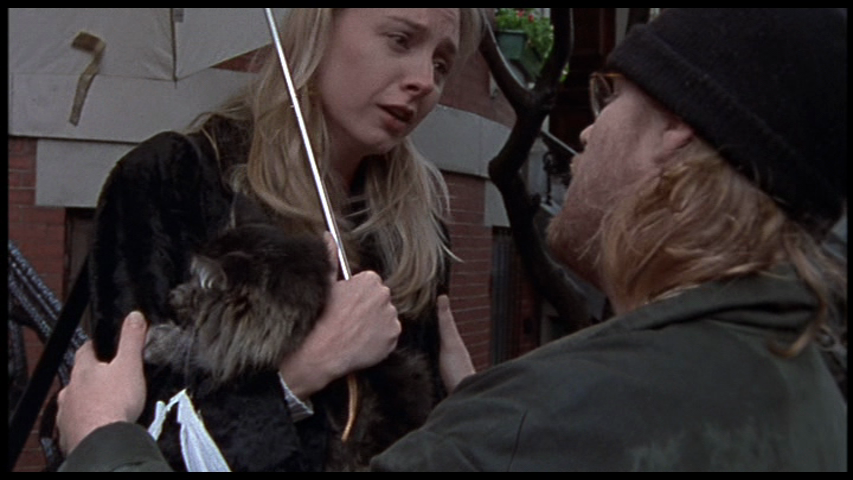
There is a strange beauty about this little film. The way the two leads’ lives keep intersecting and their semi-conscious awareness of this. The sadness of Hope Davis’ character and her clearly tormented feelings toward her pathetic boyfriend, played exquisitely by Phillip Seymore Hoffman. (The scene where he returns to her is a beautifully acted scene.) The way the Emerson quotation weaves its humorous way through the film, only to blossom unexpectedly at the end of the film. The strange seductiveness of the Brazilian guy, and the way he starts to melt Hope Davis’ icy exterior. The fatalistic implications of the film’s name, and how they resolve. And all done in the context of what is essentially a light romantic comedy. Lovely stuff, really.
 Don’t miss out on this little gem from the glorious indie renaissance. Netflix it and enjoy a breath of fresh air!
 Irreviews